Dinner Party Timeline: Cook Everything and Still Sit Down
You've been staring at your to-do list for Saturday's dinner party for three nights running. The roast needs resting, the salad needs tossing, the wine needs breathing — and you haven't even started cooking yet. What if I told you there's a way to finish the kitchen by 6:45 and actually eat with your guests?
TL;DR — Key takeaways
- Work backwards from your dinner time — write 6:45 pm on paper and fill everything before it.
- At least half your meal should be pre-prepared or oven-based; the stovetop is where timelines break.
- Set the table and pour the first drink before anyone arrives — your future self will thank you.
- Build in a 15-minute buffer between your last cook task and the first guest knocking.
- Export your timeline to your phone so every step happens in order with no mental load.
The problem isn’t the cooking. It’s the ordering.
You have all the recipes. You’ve made the meal a dozen times. The problem is that every time you try to do it in your head — roast goes in at six, salad at six-thirty, bread warming at six-forty-five — something gets left behind. The roast comes out while the bread is still cold. You spend the first twenty minutes of the party standing at the sink instead of sitting with your guests.
This is not a cooking problem. It’s a timing problem.
The fix is to build a dinner party timeline — a simple, written schedule that tells you exactly what to do and when — and to follow it like a recipe. Not a complicated one. A short one. Four or five time blocks, written backwards from the moment you sit down to eat.
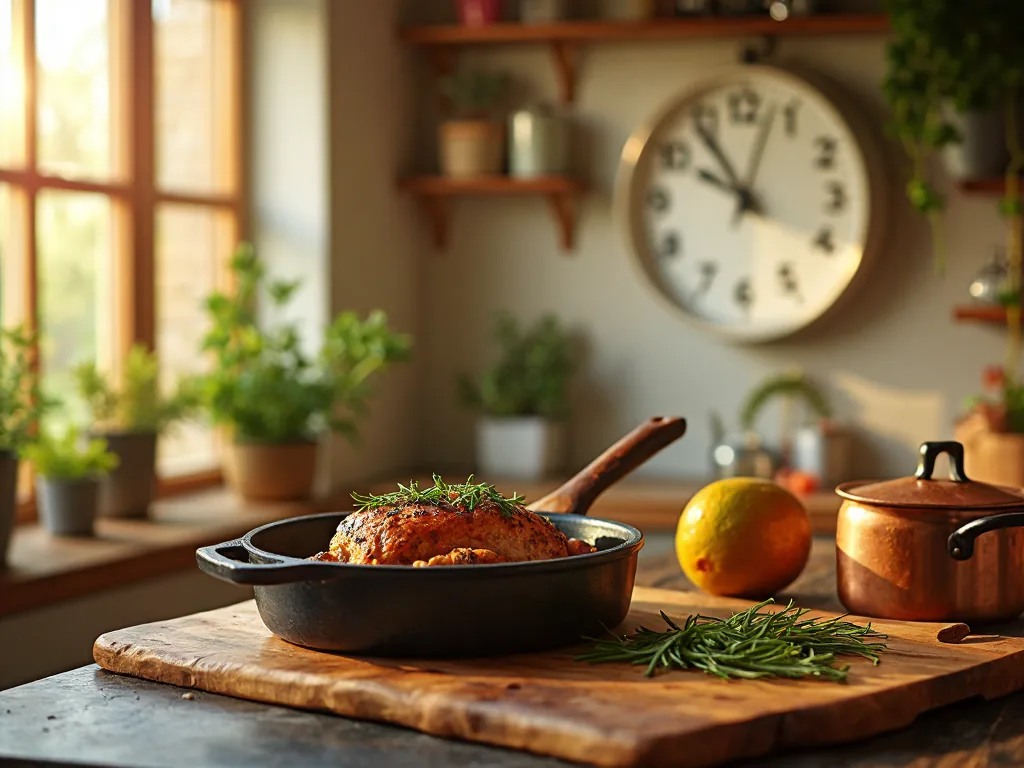
Work backwards from 7:00 pm
The single most powerful trick in event timing is this: start with the end.
Write 7:00 pm on a piece of paper. That’s when you sit down to eat. Now work backwards.
6:50 — Plate up. The food comes out of the oven, the salad gets a toss, the gravy gets poured. You’re moving through the kitchen like a line cook — quick, deliberate, nothing wasted.
6:45 — Pour the first drink. Wine goes in the glasses. Water goes on the table. This is the moment you stop cooking and start hosting.
6:00 — Hot cooking starts. The stovetop is on. The pan is hot. You’re sautéing, deglazing, finishing the sauce. This is the highest-friction part of the evening. Get it done first.
5:15 — Oven items go in. The roast, the gratin, the bread — anything that needs passive heat. Set a timer. Walk away.
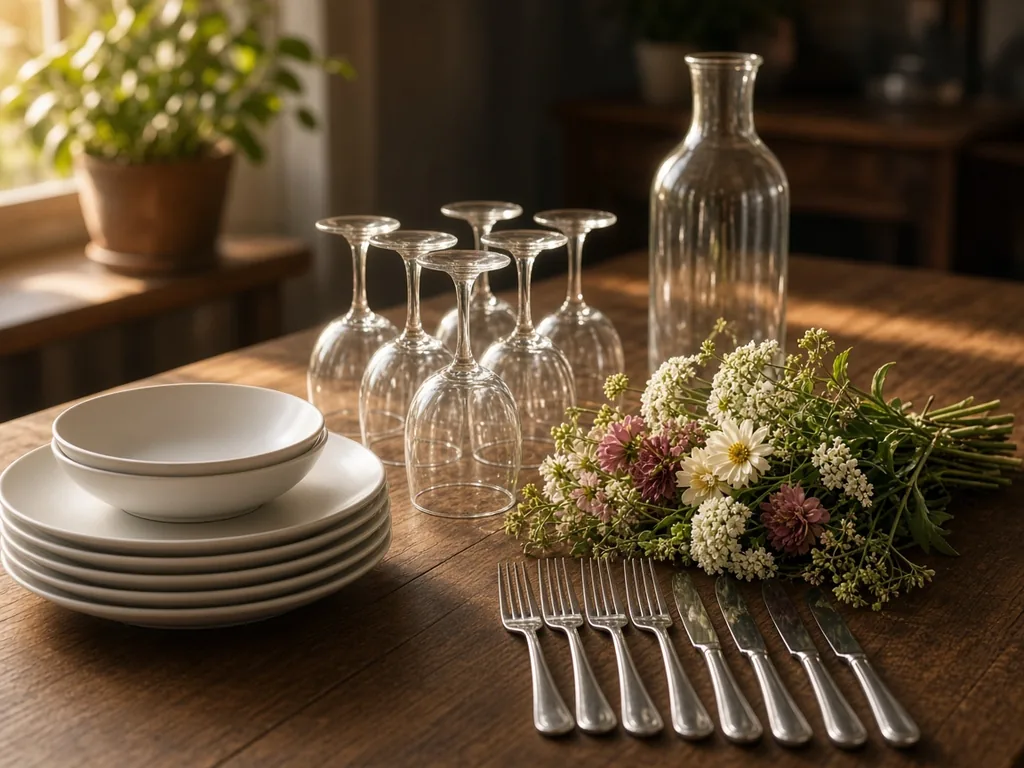
4:00 — Prep, assemble, set the table. Chopped vegetables go in bowls. The salad dressing is whisked. Candles are lit. Glasses are out of the cupboard. The dining table is cleared and set.
This is the skeleton. It looks almost too simple. That’s the point.
Why working backwards actually works
When you plan forward — first I’ll chop vegetables, then I’ll start the oven, then I’ll make the salad — you’re guessing at how long each step takes. You’re also not accounting for the fact that your roast needs forty-five minutes in the oven and twenty minutes to rest. If you put it in at the wrong time, everything after it shifts.
When you plan backwards, you’re anchoring to a fixed point: the moment you want to be sitting down, fork in hand, wine in glass, not standing at the stove. Every other task gets placed relative to that. If something doesn’t fit, you cut it or move it. You don’t move the dinner time.
This is the same principle behind any good run-of-show — whether it’s a wedding toast sequence or a dinner party kitchen schedule. You start with the thing that must happen at a specific time, and you work backwards from there.
The full evening schedule (with buffers)
Here’s a complete timeline for a 7:00 pm dinner for eight people. Adjust the times up or down based on your dinner time, but keep the intervals the same.
| Time | Task | Notes |
|---|---|---|
| 4:00 | Set the table | Plates, glasses, cutlery, candles. Clear the dining room. |
| 4:15 | Finish cold prep | Dressings made, cheese sliced, bread laid out, garnishes ready. |
| 4:30 | Put oven items in | Roast, gratin, sides that bake. Set timers. |
| 4:45 | Start the sauce / stovetop base | Onions sweating, garlic sizzling, liquid reducing. |
| 5:15 | Assemble the main | Layer the gratin, sear the meat, boil the water. |
| 5:45 | Quick walk-through | Check that all dishes are accounted for. Fill wine. |
| 6:00 | Hot finishing | Sauté vegetables, finish the sauce, check seasoning. |
| 6:40 | Toss the salad | Greens go in the bowl. Dressing goes on the side. |
| 6:45 | Pour drinks | Wine, water, anything else. |
| 6:50 | Plate or bring everything out | Family style or plated — your call. |
| 7:00 | Sit down | You’ve earned it. |
Add a fifteen-minute buffer between 6:45 and 7:00. That’s the space where the minor disasters live — a spilled glass, a guest arriving early, the dog deciding now is the time for attention. If nothing goes wrong, you use that time to take a breath, wash the biggest dish, and pour yourself a proper glass of wine.
What to prepare the day before
A well-planned dinner party has less to do on the day than most people expect. The day-before workload is where you earn your freedom on Saturday evening.
Make these the night before:
- Everything that improves with time. Braise, stew, curry, lasagna, marinade. These taste better on day two.
- Chopped vegetables. Store in sealed containers with a paper towel. They last three days.
- Dessert. Most cakes, crumbles, and ice-cream-based desserts are better made ahead.
- Dressings and sauces. Vinaigrette holds for a week. Pan sauces can be reduced and reheated.
- Your table setting. You don’t want to be hunting for glasses while a pan is smoking.
The night before should get you out of the kitchen. If you’re still standing at the counter at midnight, you’ve done too much. Leave the final sauté and the final seasoning for the day of.
When your guests arrive
Most dinner parties follow a pattern: guests arrive fifteen to twenty minutes early, usually with wine in hand and an excuse to help in the kitchen.
Here’s what to do:
- Greet at the door. Welcome them. Offer a drink. Don’t immediately shove them toward a task — some people genuinely don’t want to cook.
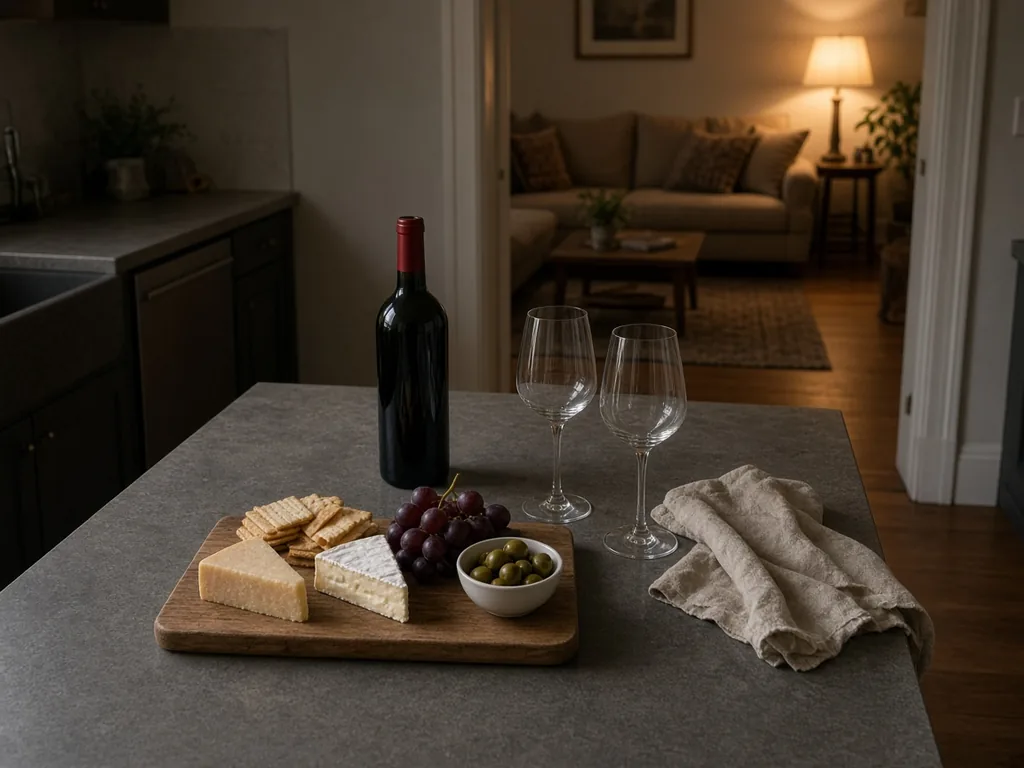
- Move to the living room or kitchen counter. Give them space. A cheese board, some olives, a bowl of nuts — grazing food that keeps them occupied.
- Set up the cocktail hour music. A playlist you’ve prepared ahead of time takes the pressure off small talk. It’s fine if conversations overlap. That’s part of the charm.
- Use arrival time as your buffer. If your guests are twenty minutes early, that’s twenty minutes you didn’t have to budget for. Use it.
- Give one person a small job. “Could you grab the bread from the cupboard?” is better than “What can I do to help?” Most people will say yes — they just need a clear, non-intimidating ask.
The stovetop trap (and how to avoid it)
The single biggest reason dinner party timelines break is this: too many things on the stovetop at once.
One pot is manageable. Two pots is manageable if one is barely simmering. Three pots, all at different stages of doneness, all requiring stirring at different intervals — that’s where the panic starts.
Rules for the stovetop:
- Maximum one active pan. One thing you’re actively stirring, flipping, or checking.
- Everything else passive. Simmering sauces, resting roasts, warming plates in a low oven — these require zero attention.
- Oven-first mentality. Any dish that can roast, bake, or braise should go in the oven, not on the stove. The oven is a team member you never have to watch.
- If you’re sautéing vegetables at the same time you’re finishing a sauce, you’ve already lost. Pick one. The other goes in the oven as a gratin or gets swapped for a raw alternative (a crisp slaw instead of a cooked side).
The cleanup strategy
Here’s something nobody tells you: you can clean while you cook, but not after.
The dish that sautéed the onions? Wash it the moment you transfer the onions to the roasting pan. The cutting board you used for the vegetables? Rinse it and put it back in the cupboard before the next task starts. The spoon you tasted the sauce with? Into the sink.
If you do this, your post-party cleanup takes twenty minutes. If you wait until everyone leaves, it takes two hours and you’ll be resentful about it.
The post-party order:
- Clear the table. Hot water, soap, sponge. Get the plates out of the way.
- Load the dishwasher or start the sink wash. Don’t soak — just wash. Soaked dishes are a future problem.
- Wipe the counters. One pass with a cloth. The kitchen should look the way you found it.
- Put away the clean dishes from yesterday. While the dishwasher is running.
- Done. Go to bed. You cooked a meal, hosted eight people, and kept your sanity.
How a timeline tool makes this effortless
All of this — the time blocks, the timers, the order of operations — is information you carry in your head while simultaneously trying to cook, greet guests, and not burn the garlic. It shouldn’t be.
Writing your dinner party timeline in one place, with reminders set for each time block, means you stop guessing and start executing. You look at your phone at 6:00 pm and it tells you exactly what to do next. No mental load. No “wait, what was I supposed to be doing right now?” Export the timeline to your calendar so every step fires a gentle reminder.
This is exactly the kind of thing a dedicated schedule builder is built for — building the evening hour by hour with times and notes, then having it right there on your phone as the day unfolds.
A timeline for different dinner times
The same structure works whether you’re eating at 6:00 pm or 9:00 pm. Just shift every time block earlier or later and keep the gaps the same.
6:00 pm dinner:
- 3:00 — Set table, cold prep
- 3:30 — Oven items in
- 4:30 — Stovetop base
- 5:15 — Assemble and hot finish
- 5:45 — Salad toss, pour drinks
- 6:00 — Sit down
8:30 pm dinner (a late Sunday roast):
- 5:30 — Set table, cold prep
- 6:00 — Oven items in (longer cook times for Sunday roasts)
- 7:00 — Check and baste
- 8:00 — Hot finishing
- 8:15 — Salad, drinks
- 8:25 — Plate up
- 8:30 — Sit down
The intervals matter more than the clock times. Keep the gaps, shift the hours.
The thing that separates a good dinner party from a great one
It’s not the food. It’s the host’s ability to be present.
When you’ve planned the evening in advance — written down, with clear time blocks and sensible buffers — you’re not standing in the kitchen worrying about timing. You’re at the table. You’re listening. You’re pouring someone another glass of wine because you noticed theirs is half empty.
A timeline doesn’t make the meal better. It makes you better at being there. And that’s what your guests actually remember.
Planning everything in one place
A dinner party timeline is just one piece of a bigger picture. The guest list you’re sending invites to. The budget for food, drinks, and decorations. The task checklist of everything that needs buying, prepping, or setting up. The seating plan for the table. All of these things live in different places, and that’s exactly what makes the evening feel like work instead of celebration.
Keeping the whole plan in one place — guest list with RSVPs, budget for food and drink, timeline for the evening, task checklist with due dates, and a seating layout for the table — means you can stop carrying it all in your head and start executing with confidence.
If that sounds like it could make your life easier, Event Stories is free on the App Store with no account required and works offline. Guest list with RSVP tracking, budget charts, timeline building, seating planner, task checklist, and PDF export — everything in one place.
Free on the App Store · No account required · Works offline.
Frequently asked questions
How early should I start cooking before a dinner party?
Start hot cooking 45 to 60 minutes before your planned dinner time. Everything that can go in the oven or slow cooker should be in by then. The final 15 minutes are for plating and finishing touches. The earlier you start actual stovetop work, the more stressed you'll be — and the less you'll enjoy the party.
What can I prepare the day before a dinner party?
Anything that improves with time: braised dishes, soups, marinades, desserts, chopped vegetables stored in sealed containers, bread (stale bread is fine — you'll toast or rehydrate it), and your table setting. The night-before workload should take you out of the kitchen, not keep you there.
How do I keep guests entertained while I'm cooking?
Give them a job that's actually enjoyable. A cocktail hour with a simple spread — crackers, cheese, olives, bread — lets people graze. Offer to pour drinks or let them help with one assembly task. Most guests genuinely want to help; they just don't know what to do. A prepared playlist and a glass of wine already on the counter go a long way.
What's the best dinner party timeline for 8 guests?
For 8 guests, plan to serve dinner at 7:00 pm. Start hot cooking at 6:00 pm. The main dish should be oven-based (roast, gratin, baked pasta). The salad gets tossed at 6:40. Bread warms alongside the main. You plate at 6:50 and sit down at 7:00. This timeline works whether you're cooking for four or twelve — the proportions stay the same.
How do I handle a dinner party when I'm cooking for someone else's dietary needs?
Plan the dietary-restricted version first, then build the regular meal around it. If one guest is gluten-free, make the base dish gluten-free and add cheese or croutons on top for everyone else. Pre-label dishes when possible. Write everything down so you don't have to hold it all in your head on the night.
What should I do if I'm running late?
Cut a task. Not two — one. If the bread isn't warmed, guests will eat fine without it. If the salad is just greens without the fancy garnish, it still tastes good. The goal is to keep your nerves steady. A small compromise is better than cascading panic.
How long should a dinner party last?
Two to three hours is the sweet spot for most people. Plan a clear ending around 10:00 or 10:30 pm — put out coffee and mints at 9:30, and let the natural wind-down happen. You don't need to announce the end; the coffee and the clearing of plates signal it gently.