Event Budget Planning: The Ultimate Stress-Free Guide
Let's be honest — the word 'budget' probably makes you want to put something off until later. But the right approach breaks the entire planning process into manageable, even soothing steps. Here's how to plan a budget that works, without the spreadsheets or the stress.
TL;DR — Key takeaways
- Set your ceiling first — one honest maximum you're comfortable spending, not a target or a guess.
- Break the budget into categories; venue and catering are usually the two biggest lines.
- Build in a 10–20% contingency buffer so unexpected costs never derail you.
- Track every expense in real time instead of reconciling it all later.
- Check in weekly for about fifteen minutes to stay aware and avoid last-minute surprises.
Let’s be honest — the word “budget” probably makes you want to put something off until later. Or you open a spreadsheet and immediately feel overwhelmed.
Here’s the thing: a budget isn’t a set of rules. It’s a conversation you have with yourself about what matters most. When you approach it the right way, it’s actually — dare I say it — reassuring. Because once you know where your money is going, you can stop worrying about surprises and start planning with confidence.
This guide walks you through every phase of event budgeting — from that first number you write down to the last receipt you file. And the best part? You don’t need to be a finance person to do it well.
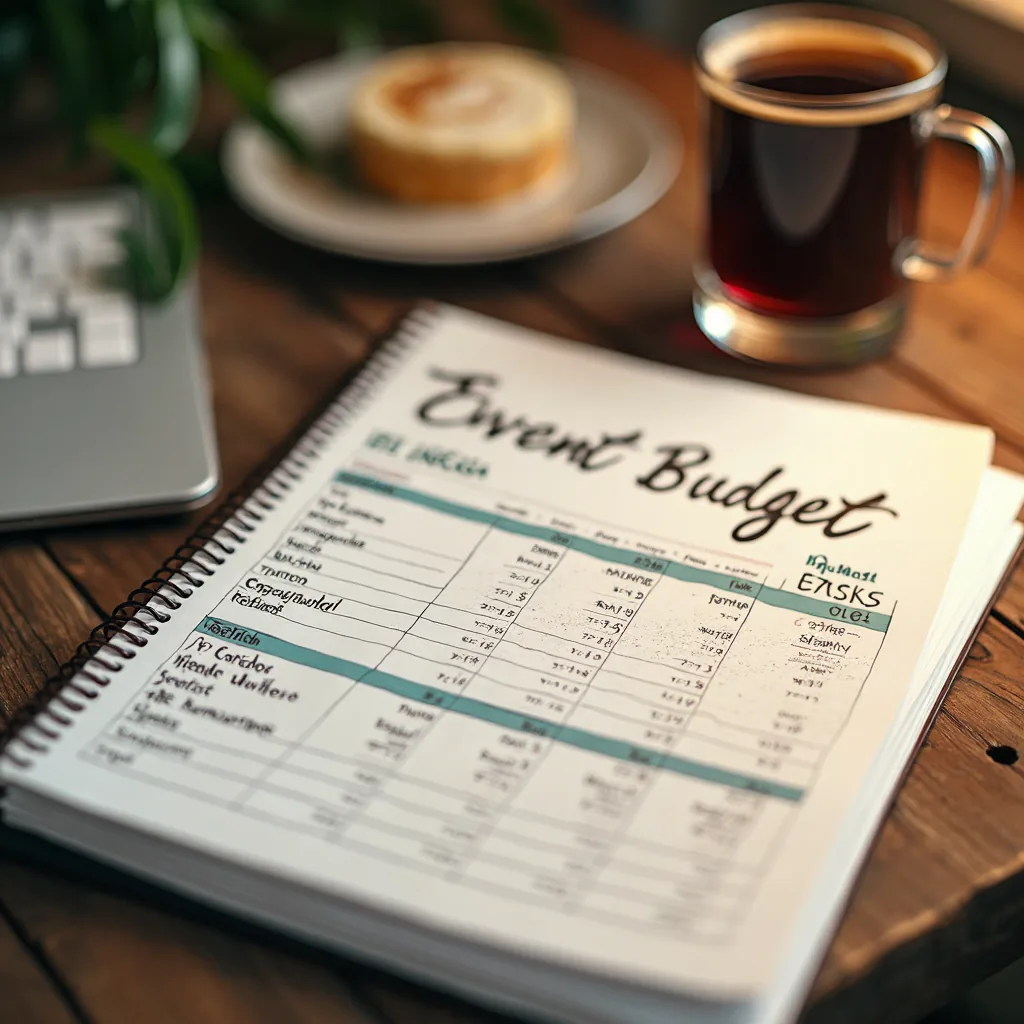
Why event budgets go off track (and how to avoid it)
Every event budget has the same origin story: something unexpected costs more than planned, and suddenly you’re scrambling.
The reason is almost always the same — the budget was treated as a one-time spreadsheet, not a living tool. A budget that you actually use looks like this:
- You set the ceiling first — the absolute maximum you’re comfortable spending. Not a target, not a guess. A number.
- You break it into categories — venue, catering, decor, everything that costs money. Each category gets its own space to breathe.
- You track against it regularly — because an untracked budget is just a wish list with a deadline.
Step 1: Define your event (before you think about money at all)
It sounds backwards, but the most important budgeting step has nothing to do with numbers. Before you write a single dollar amount, answer these questions:

What kind of event is this? Is it an intimate gathering of twenty people, a conference of two hundred, a birthday party that’s becoming something bigger than you planned? The type of event determines everything — including your budget.
How many people are attending? Guest count is your biggest cost driver. It determines venue size, catering scale, even the number of registration desks you’ll need. Get this right early.
What’s the vibe? Indoor or outdoor? Formal or casual? These choices have real financial implications that show up in the venue and catering lines.
When and how much time do you have? A well-planned event feels relaxed because it’s planned. Rushed events are expensive — last-minute bookings always are.
Step 2: Set your ceiling (and be honest about it)
This is the number. The absolute maximum you’re willing to spend.
It might come from savings. It might come from contributions from others. It might come from a combination of sources. Whatever it is — write it down and stick to it.
A note on contingency (the “just in case” fund):
Every event you’ve ever heard of has had an unexpected expense. It’s not a matter of if — it’s a matter of when. So build in a buffer. These are general guidelines based on event type:
| Event Type | Recommended Contingency |
|---|---|
| Birthday party | 10% |
| Baby shower | 10% |
| Anniversary dinner | 15% |
| Wedding | 15–20% |
| Corporate event | 10–15% |
That 15% on a wedding budget isn’t extra spending — it’s peace of mind.
Step 3: Divide your budget across the categories that matter
Now for the part people usually dread — splitting the numbers. But here’s the secret: you get to decide what matters. The percentages below are starting points, not rules.
Venue: 25–30% — This is usually the biggest single expense, and it sets the tone for everything else.
Catering & drinks: 25–30% — Food and beverage is almost always the second-largest cost. Budget for this first.
Decor & flowers: 10–15% — This is where your personal taste comes in. Some people splurge here; others keep it simple and let the venue do the talking.
Entertainment: 10–15% — Music, speakers, activities — whatever sets the mood.
Photography/videography: 10% — You might not realize how important this is until you’re looking back at the photos months later and realize there’s no one in them taking them.
Invitations & stationery: 3–5% — Digital saves money. Beautiful paper saves memories.
Attire: 5–10% — For the host or organizers, or as part of a dress code.
Transportation: 3–5% — If you need shuttle services or parking for guests.
Miscellaneous/contingency: 10–15% — The buffer fund we talked about. Don’t skip it.
These are guidelines, not commandments. If music matters more than flowers, shift the numbers. Your event, your priorities.
Step 4: Track every expense (in real time)
This is where most budgets start to drift. Not because people are careless — because life is complicated, and if you’re not logging things as they happen, they slip through the cracks.
Real-time logging looks like this:
- Spend money? Log it right then.
- Update the category it belongs to.
- Check your remaining buffer — just a quick glance at what’s left.
- Catch problems early, when there’s still time to adjust.
Step 5: Check in weekly
Once a week during planning — just fifteen minutes — review:
- What have I spent this week?
- Am I staying within my categories?
- Is anything creeping up that I didn’t expect?
- Do I need to adjust something?
This isn’t about perfection. It’s about awareness. When you check in weekly, you’re never faced with a budget emergency on event day because you’ve been keeping a gentle eye on things all along.
How Event Stories makes budgeting feel manageable
Event Stories was built around this exact approach. Create your event, set each budget category, and track every expense as it happens from your phone. The visual summaries show you exactly where you stand — clearly, calmly, without the spreadsheet stress.
No account required. Works offline. Free on the App Store.
Frequently asked questions
How much should I budget for a birthday party?
It varies widely, but most birthday parties fall somewhere between $500 and $3,000 — depending on how many people, where you're hosting, and what kind of food and atmosphere you're going for. Venue and catering are always the biggest costs.
What's the most important budget category?
Venue and catering. They're usually the largest expenses, and they're also what determines your date availability. Book these first, and everything else fits around them.
How much contingency should I build into an event budget?
Plan a buffer of 10–20% depending on the event — around 10% for birthday parties and baby showers, 15% for anniversary dinners, and 15–20% for weddings. It isn't extra spending; it's peace of mind for the costs you can't predict.
When should I start tracking my budget?
From the very first number you write down. As soon as you have a ceiling in mind, enter it. An untracked budget is just a hope with a deadline.
How often should I review my event budget?
Once a week during planning is plenty. Spend about fifteen minutes checking what you've spent, whether you're staying within your categories, and whether anything is creeping up. Regular check-ins mean you never face a budget emergency on event day.