Backyard Party Rain Plan: What to Do Before It Pours
A backyard party rain plan is a written backup you build while the sky is still clear. Book a dry room, put up a 10x10 canopy for light rain, and set a lightning rule so the day-of call is a decision you've already made.
TL;DR — Key takeaways
- Book the dry room two weeks out; it has to hold your whole table, the food, and the drinks.
- Put a canopy up for light rain and set the lightning rule: the second thunder rolls, everyone goes inside.
- Weigh every leg of the canopy, and take it down the moment the wind picks up.
- Write the decision rules and a switch-day timeline in the last few days, so the call follows a list.
- Give every step an owner and a reminder, so the plan runs itself on a wet Saturday.
You have spent weeks on the table settings, the playlist, and the cake, and the one thing that can undo all of it is weather you never planned for. The part that goes wrong is the scramble to decide where the guests go. The fix is a plan you build on a dry Sunday, so the wet Saturday runs on a plan you made while it was clear.
What a backyard party rain plan actually is
A backyard party rain plan has three moves, and you make them while the sky is still clear. First, book a dry room that can hold your whole table, the food, and the drinks. Second, put up a 10x10 pop-up canopy, or a sturdier frame tent for a larger crowd, to carry the party through a light shower. Third, write the decision rules and a switch-day timeline, so the call is a check against a list when it finally pours.
One rule sits above the rest: the second you see lightning or hear thunder, or the wind picks up, everyone goes into the dry room, no matter how light the rain is. The steps below are the order to build the plan in, from booking the room two weeks out to the afternoon you make the call.
Step 1: Pick and book the dry room
The dry room is what saves the party, so you pick it first, while the calendar is still open. It has to hold your whole table, the food, and the drinks. A few options:
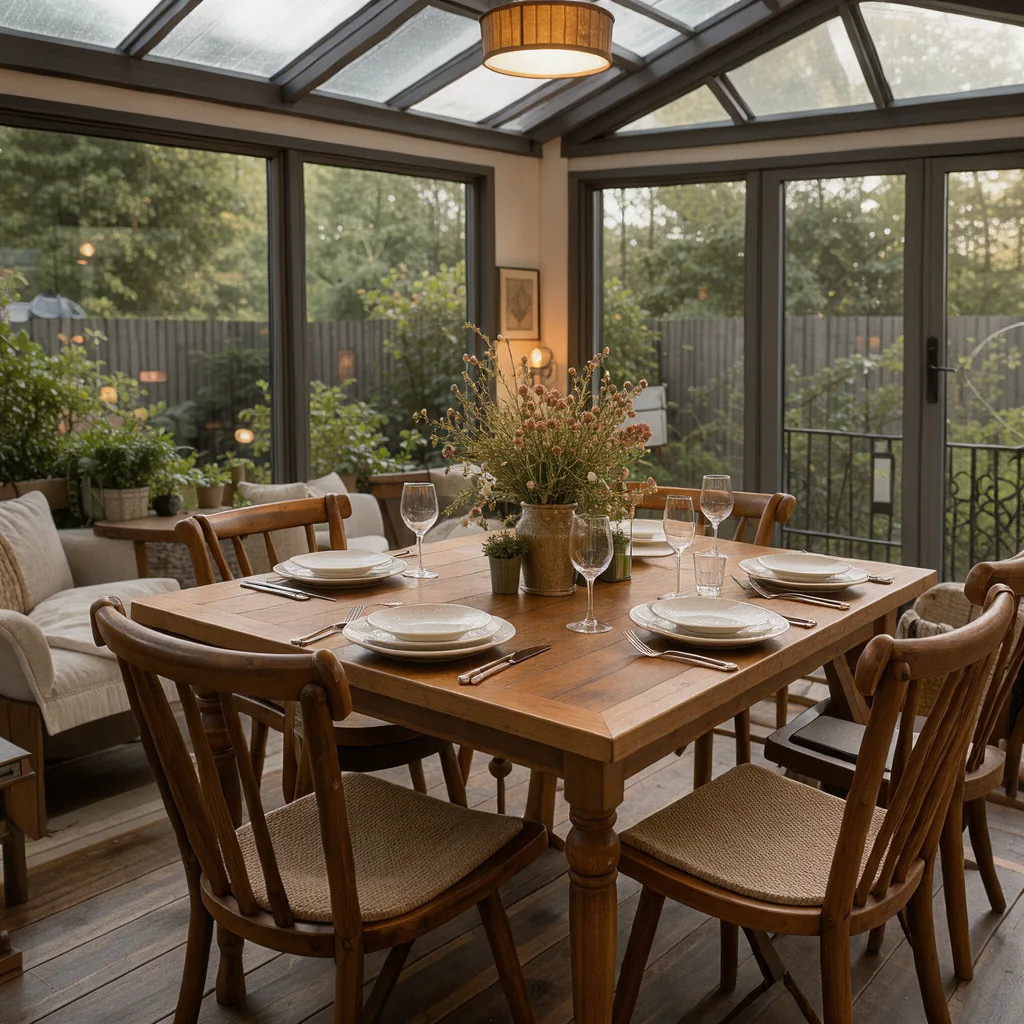
- A sunroom or enclosed porch at home or at the venue.
- A rented community hall, church basement, or private club room. In the US these run about $100 to $500 for an evening in 2026, and your local market sets the real price.
- A friend’s basement or a neighbor’s garage, if you have the relationship.
Book it now, for your date, and log the deposit as a budget line. You’re betting on a maybe, which is why you do it early. If you are cooking, the how much food per person for a party guide tells you how much food you will be carrying inside.
Step 2: Choose the canopy or the tent
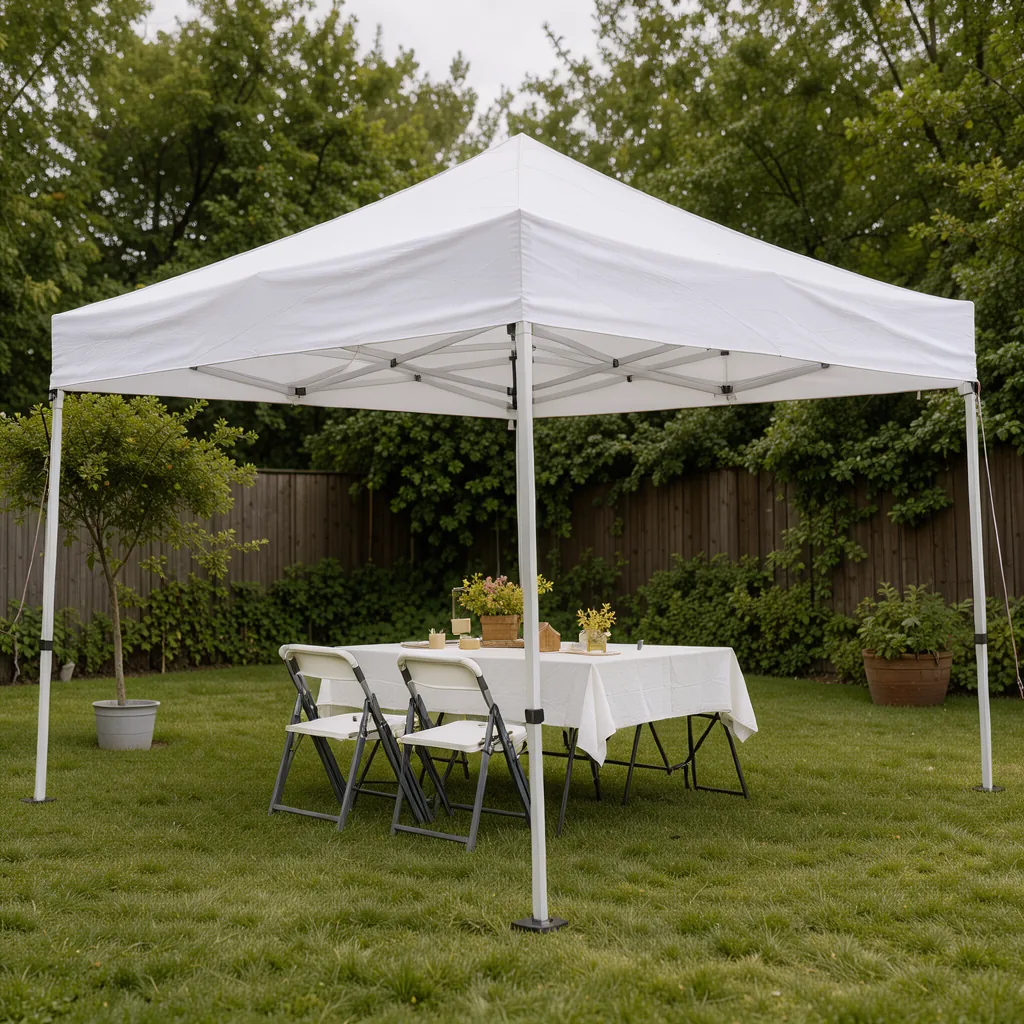
The canopy’s job is to keep the party dry under light rain, and it doesn’t stand up to wind. A 10x10 pop-up covers about 100 square feet, roomy for a single table or a food-and-drink station and far too small for a 40-guest crowd. In the US, a 10x10 pop-up rents for about $25 to $75 a day, and a sturdier 10x10 frame tent runs about $100 to $200, with delivery usually added.
For a bigger party you have two choices. Put up several 10x10 canopies around the lawn, or rent one larger frame tent, which for 40 to 60 guests runs about $300 to $1,200 in the US depending on size and add-ons. Whichever you pick, weigh every leg down, and take the canopy down the moment the wind picks up, because a light pop-up lifts and folds in a gust. A frame tent handles wind better, but the lightning rule still wins.
Step 3: Set your weather rules
Now you write the rules, one line each, so the decision follows a list:
- Light rain, no wind: stay outside under the canopy.
- Steady or heavy rain: move the party into the dry room.
- Lightning, thunder, or gusty wind: everyone into the dry room, whatever the rain is doing.
The last rule keeps people safe, and it does not depend on your reading of the rain. The moment you hear any thunder, or the wind picks up, everyone goes into the dry room, and you wait to send them back out until the storm has clearly passed.
On the forecast, NOAA puts a five-day forecast at about 90 percent accurate, a seven-day one at about 80 percent, and a ten-day forecast right about half the time. Those are US figures. So trust the broad pattern out to five days, the day-by-day detail in the last two or three, and that’s when you set the final call.
Step 4: Build the switch-day timeline
Once the room and the canopy are booked, write the run of show for the switch. The idea is that the order of operations is decided while it’s dry, so the wet day takes two minutes of decisions.
Here is the timeline for a party that starts at 5:00 pm:
- Two days before: read the forecast for the pattern. This is the first real call, and if a storm looks likely you lock in the dry-room details and the canopy delivery.
- Morning of: recheck the hourlies. The canopy is already booked, so you only confirm delivery and that the dry room is ready, with your crew.
- 1:00 pm: the go or no-go call. One person owns it, and it chooses between canopy-up-and-stay-out and move-everything-into-the-room.
- 2:00 pm: execute. Stake the canopy and weigh the legs, or move the table, chairs, and food into the dry room.
- 4:00 pm: the final check. If the room is set, you can relax, because the plan is already in motion.
A tool that builds a run of show with times and durations and exports it to your calendar keeps this from being one person’s problem. The dinner party timeline goes deeper on building the run of show for the rest of the evening.
Step 5: Brief the crew and make the day-of call
The plan only works if more than one person knows it, so every step gets a due date and an owner:
- Book the dry room: you, two weeks out
- Order and confirm the canopy: you, five days out
- Weights and the staking plan: a friend, morning of
- Move the table, chairs, and food into the dry room: your two helpers, 2:00 pm
- Move the cold drinks: the friend cooking, 2:00 pm
- Tell guests where to go: you, the moment the call is made
Set a reminder on each one for the day before or the morning of. That’s what turns a plan into something that happens on its own, instead of a set of notes one person is supposed to remember.
When you make the call, tell guests one sentence, in person and by text: “Rain is coming, so the party is moving into the sunroom. Same time, same plan, just dry.” Guests follow the host’s call. What you owe them is a fast, calm message and a dry room that is actually ready when you say the word.
What it costs, in the US and elsewhere
Every number below is a US reference for 2026. Price your own local market, because tents and halls vary a lot by city and season.
| Layer | US range (2026) | Notes |
|---|---|---|
| 10x10 pop-up canopy, one day | about $25 to $75 | Shade and light rain; weigh every leg |
| 10x10 frame tent, one day | about $100 to $200 | Sturdier in wind; often delivered |
| Delivery and setup | about $40 to $100 | Varies by distance |
| Frame tent, 40 to 60 guests | roughly $300 to $1,200 | Size and add-ons set the price |
| Community hall or club room, one evening | roughly $100 to $500 | Your local market |
A small party that rents just the canopy, with a dry room already booked through a friend, can land under $300 to keep the party dry. A larger party that rents the tent and the hall is a bigger line, but it’s a small part of what a rained-out party costs in lost food and a crowd of wet guests.
Log the canopy and the room the moment you book them, so the number is not a surprise at the end. The event budget guide is a good home for that line item.
Keeping the whole plan in one place
The weather plan is one part of a bigger list: guest list and RSVPs, the budget for the canopy and the room, the switch-day timeline, a task checklist, and the message to guests.
Event Stories keeps the guest list, the budget, the day-of timeline, and the task checklist together on your phone. Build the switch-day timeline hour by hour, set a reminder for the forecast check, and log the canopy the moment you book it. When all of it lives in one place, a storm is a list you work through instead of a dozen frantic phone calls.
Free on the App Store · No account required · Works offline.
Frequently asked questions
How far in advance should I make a rain plan for an outdoor party?
Book the dry room about two weeks out, while rooms are still open, and order the canopy about five days out. Trust the overall forecast pattern out to roughly five days and the day-by-day detail in the final two or three, so those are your two checkpoints. The plan is done before the weather turns, which is why you start early.
Is a pop-up canopy worth it for a backyard party?
Yes, if your yard has no other cover. It keeps the party outside through a light shower and is cheap to rent. It does have limits: a 10x10 covers only about one table's worth of ground, and a light pop-up does not stand up to wind, so weigh every leg and take it down when the gusts pick up. In the US a 10x10 pop-up rents for about $25 to $75 a day, and a sturdier frame tent runs $100 to $200, with delivery added and local prices differing by city and season.
What is a good rule for deciding whether to move the party inside?
Use a three-level rule. Light rain with no wind keeps the party outside under the canopy. Steady or heavy rain moves it into the dry room. And the moment there is any thunder, or the wind picks up, everyone goes inside regardless of the rain. One person owns the call so the group does not argue in the wet.
How much does it cost to rent a tent for a backyard party?
In the US in 2026, a 10x10 pop-up canopy rents for about $25 to $75 a day, a sturdier 10x10 frame tent for $100 to $200, and delivery runs about $40 to $100. A frame tent for 40 to 60 guests runs $300 to $1,200, and a community hall for an evening is a separate fee of roughly $100 to $500. Prices swing by city and season, so check your local market, and log the total as a budget line the day you book it.
How do I tell my guests the party is moving indoors?
Send one short message the moment you decide, to everyone, in person and by text. Something like: 'Heading inside for rain. Same time, same plan, just drier.' You do not owe anyone a weather explanation, and a quick, calm note lands better than a long one.
Should I rent a tent or book an indoor backup room?
For a backyard party, do both, at different jobs. The canopy or tent is the light-rain cover that keeps the party outside, and the indoor room is the heavy-rain backup that holds everyone. Book the room first and earliest, because it is the part that saves the day when the rain will not stop. If the budget only allows one, book the room that fits your whole table.